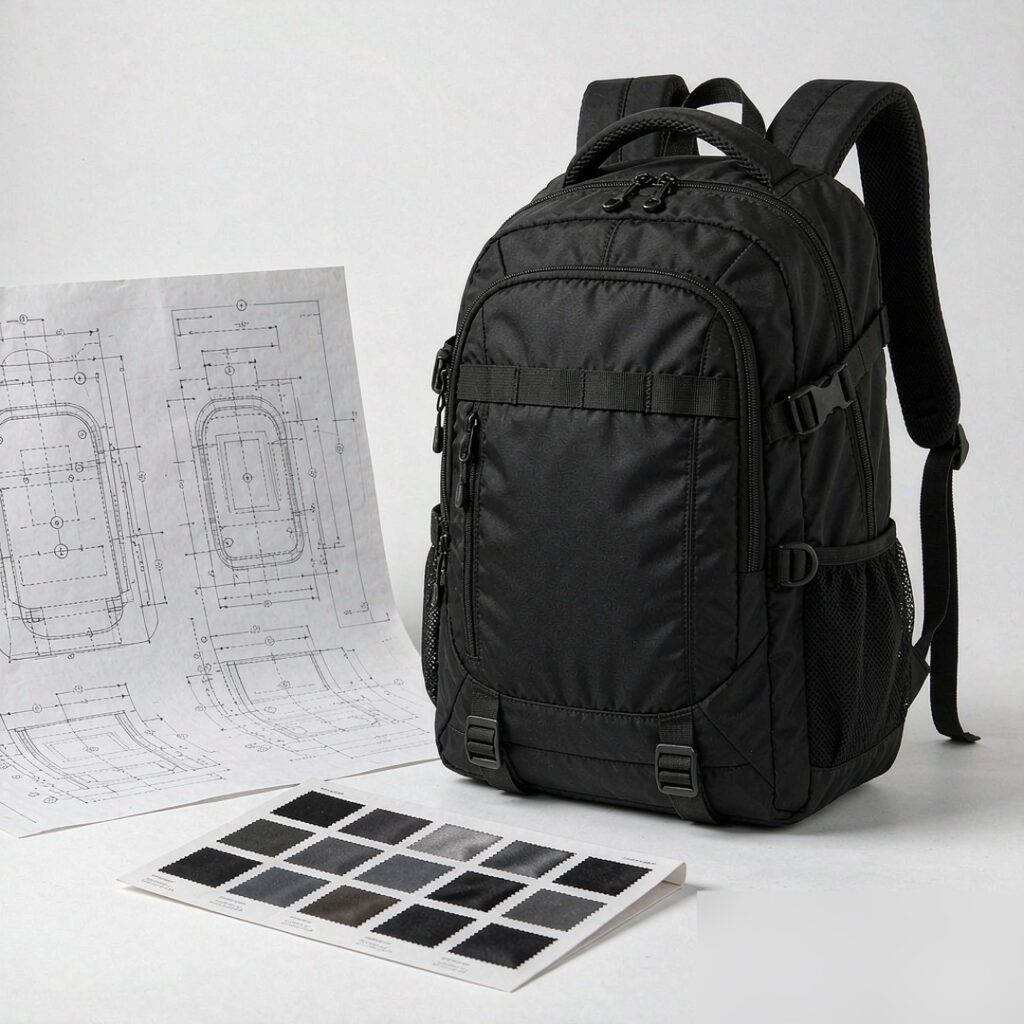
A backpack program rarely fails at the sewing table. It fails at the brief. Brands that arrive at a factory with a clear specification — dimensions, material, hardware, packaging, test requirements — move from enquiry to bulk shipment in weeks. Brands that arrive with a mood board and a target price usually spend three months on samples and still ship late.
This guide walks through a standard OEM backpack project the way it actually runs on the factory floor, using the same steps we follow for commuter, travel, and fashion backpack lines. If you are still deciding between materials, read our comparison of leather and water-repellent leather first.
1. Write a factory-ready brief, not a mood board
A brief a factory can quote from contains six things. Miss any one of them and the quotation you receive is a guess.
- Dimensions — height, width, depth in millimetres, plus the laptop size the main compartment must fit.
- Material — leather type (full grain, top grain, crazy horse, nappa), thickness in millimetres, or the fabric equivalent with GSM.
- Hardware — zipper brand or grade, puller style and finish, buckles, D-rings, magnetic closures.
- Construction — number of compartments, padding thickness, edge finish (painted, folded, bound), lining material.
- Branding — logo method (deboss, emboss, foil, woven label, metal plate), placement and size.
- Packaging — polybag, dust bag, hangtag, retail box, and the carton configuration for export.
2. The six-step timeline
Most backpack OEM projects follow the same sequence. The variable is how fast the brand approves each stage.
- Enquiry and quotation — 2 to 3 working days once the brief is complete.
- Counter-sample or tech pack review — the factory proposes construction adjustments for manufacturability.
- Pre-production sample — the reference piece. Nothing goes into bulk until this is signed off.
- Material confirmation and lab testing — leather or fabric lot locked, colour and thickness approved.
- Bulk production — typically 25 to 40 days for a leather backpack order depending on hardware lead time.
- Inspection and shipping — final QC report, packing list, and export documentation.
3. Where sampling usually goes wrong
Three problems account for most sample rejections we see:
- Colour drift. Every leather lot shifts slightly. Approve against a physical swatch, not a screen, and keep the signed swatch on file for bulk matching.
- Hardware substitution. A lighter or brighter finish changes the perceived value of the whole bag. Specify finish and weight, not just “gold zipper”.
- Proportion changes at the last minute. Moving a pocket or a strap anchor after sampling restarts the pattern work. Freeze the drawings before the pre-production sample.
The same logic applies to commuter-specific features — our 12-point commuter checklist covers the details buyers check first.
4. The six cost drivers
If a quotation looks unusually cheap, one of these has been quietly downgraded:
- Hide grade and the percentage of usable area per hide
- Hardware grade and finish
- Lining and interior padding density
- Number of stitching operations (pockets and reinforcements add operations, not just material)
- Branding method — a metal plate costs materially more than a deboss
- Order quantity and cutting efficiency — leather nesting wastes more at low volume
5. MOQ, tooling, and where to start small
Leather backpacks usually start at a few hundred pieces per colourway because of hide minimums and dying lots. If you are testing a new design, ask for a two-colour launch: it spreads the first order across two sellable options without doubling the tooling risk. Novelty shapes carry the same rule and more — see how we approach animal-shape novelty backpacks as a commercial product rather than a one-off sample.
6. Compliance you should confirm in writing
Ask for the material test reports that apply to your destination market before bulk starts, not after. Typical requests include restricted substance testing for leather and textiles, azo dye screening, and nickel release limits for metal parts that touch skin. Confirm who pays for testing and whether the report is issued in the brand’s name.
What to do next
Send the six-point brief above with your reference images. A factory can then return a costed quotation, a proposed construction, and a realistic sampling calendar in one round — instead of five rounds of questions. That single change is usually worth three weeks of launch timing.